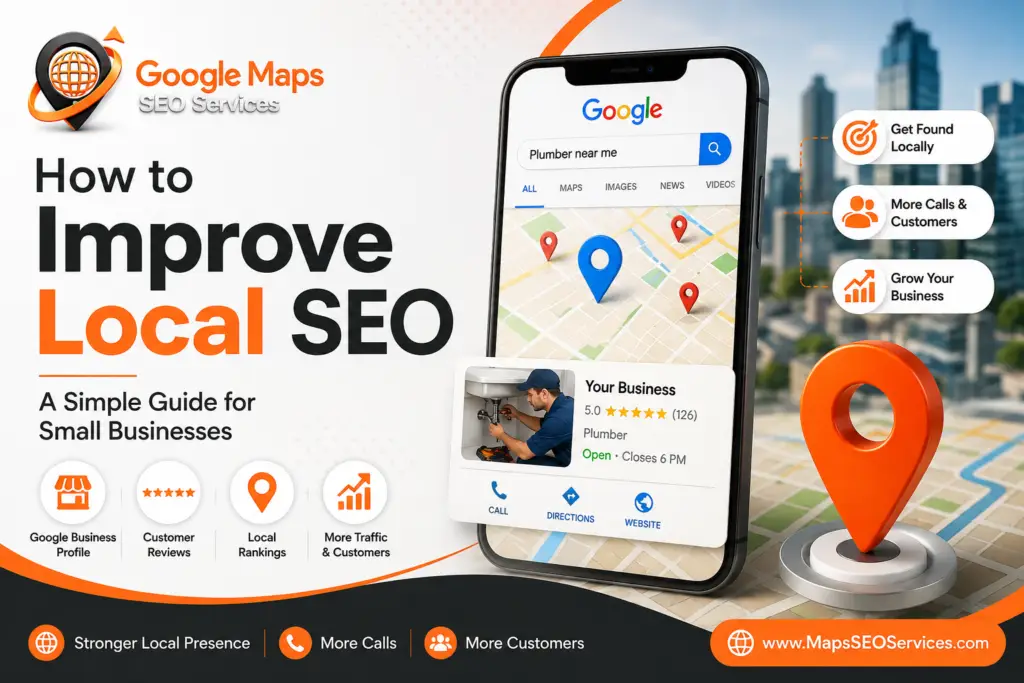
If you’ve ever searched for “plumber near me” or “best dentist in Lahore,” you already know how local search works — Google shows you businesses close to you before almost anything else. That’s exactly why local SEO has become such a big deal for small businesses, service providers, and anyone trying to win customers in a specific city or neighborhood.
At MapsSEOServices, this is basically our whole job: helping businesses get found by the right people, right when they’re searching.
So what actually moves the needle? Let’s walk through it.
What Local SEO Really Means
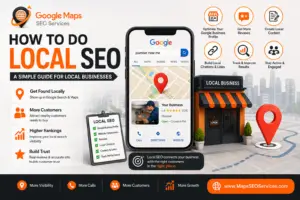
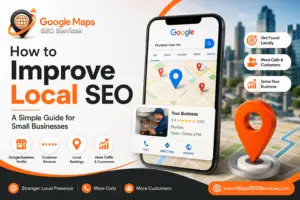
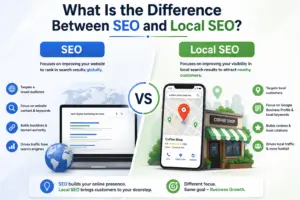
In simple terms, local SEO is everything you do to show up when people in your area search for what you offer.
Someone types “SEO services near me,” “dentist in Lahore,” or “real estate company in Islamabad” — and Google has to decide, in a split second, which businesses deserve to be shown first. It looks at your location, your Google Business Profile, your website, your reviews, and your overall online reputation to make that call.
Why It’s Worth the Effort
Think about your own habits. Before calling a business, you probably check where it’s located, what it offers, what other people are saying about it, and how to get in touch. Your customers do the same thing.
Get local SEO right, and you’ll typically see:
- More appearances in local search results
- Better visibility on Google Maps
- More calls and inquiries
- More relevant traffic landing on your website
- Stronger trust with potential customers
- More people finding you exactly when they’re ready to buy
That last point matters most — showing up at the right moment, when someone’s actually ready to act, is worth more than almost anything else in marketing.
Setting Up Your Google Business Profile
This is the foundation. Sign in with your Google account and create your profile using your real business name — don’t get creative here, accuracy matters more than branding. Pick the category that actually fits your business, add your phone number and website, set your address or service area, and list your hours.
Google will likely ask you to verify the business before it goes live, so budget a little time for that step.
Don’t rush this part. A profile with missing or wrong details confuses customers before they even reach out — and that’s a bad first impression you don’t get to undo easily.
Getting the Most Out of Your Profile
Creating the profile is step one. Keeping it sharp is where the real work happens.
Start with your primary category — make sure it genuinely reflects your main service — and add secondary categories only where they truly apply. Write your business description like a human explaining what you do, not like you’re trying to trick an algorithm.
Beyond that, a few habits go a long way:
- Post real, clear photos of your business (no stock images)
- List out your actual services
- Keep your hours current, especially around holidays
- Add products where it makes sense
- Post updates regularly through Google Business Profile
- Reply to customer questions
- Respond to reviews — good and bad
- Double-check your contact info stays accurate
One thing we always tell clients at MapsSEOServices: skip the keyword stuffing. A profile that reads naturally builds more trust than one clearly written for search engines.
Keep Your Details Consistent Everywhere
Your business name, address, phone number, and website need to match wherever they appear online — directories, industry sites, social profiles, local platforms, all of it. These consistent mentions are called local citations, and search engines pay attention to them.
Go through your existing listings every so often and fix anything outdated. It sounds tedious, but inconsistent info is one of the quiet ways businesses lose customers without realizing it.
Earning Real Reviews
Reviews shape how strangers decide whether to trust you before they’ve even spoken to you.
Ask happy customers to share honest feedback — make it easy by sending them your direct Google review link instead of making them hunt for it. And whatever you do, don’t buy fake reviews. It’s tempting, but genuine feedback is what actually builds lasting trust, and the risk isn’t worth it.
Reply to reviews too. Even a short, thoughtful response — to praise or criticism — shows you’re actually paying attention to your customers.
Making Your Website Work With Your Profile
Your Google Business Profile shouldn’t operate in isolation — your website needs to back it up. Make sure it clearly explains what you do and where you do it. Pay attention to your page titles, headings, meta descriptions, URLs, images, and how your pages link to each other.
If you serve multiple areas, it can help to build dedicated location or service-area pages — just make sure each one offers something genuinely useful, not a copy-pasted page with the city name swapped out.
Writing Content That Actually Helps
Good local content answers the questions your customers are already asking before they pick up the phone.
A real estate company might write a guide on buying property in Lahore. An AC repair business could put together an article on common summer AC problems. A travel company might cover popular destinations worth visiting.
The trick is thinking like your customer, not like a marketer — what do they actually want to know?
Earning the Right Backlinks
Backlinks from relevant, trustworthy sites still carry weight for local SEO. Look toward local business associations, industry publications, suppliers, community organizations, and sponsorships for natural opportunities.
Quality beats quantity here, every time. A handful of genuinely relevant links will do more for you than a pile of low-quality ones ever could.
Why Bring in a Local SEO Team
Local SEO isn’t a one-and-done task — it’s ongoing, and your competitors aren’t standing still either. They’re updating their profiles, publishing content, gathering reviews, and building their presence right alongside you.
A good local SEO partner will look at your current rankings, your Google Business Profile, your website, your competitors, your citations, your reviews, and your backlink profile — and turn that into an actual plan.
That’s what we focus on at MapsSEOServices: building a strategy shaped around your specific services, target areas, and customers, instead of throwing random tactics at the wall and hoping something sticks.
Keeping Track of What’s Working
Don’t guess — measure. Keep an eye on your Google Maps visibility, website traffic, calls, direction requests, profile interactions, keyword rankings, and leads.
Tracking this consistently tells you what’s actually driving results and where you’re wasting effort.
The Bottom Line
Local SEO isn’t a switch you flip once and forget about. It’s a habit — one that pays off the longer you stick with it.
Start with a complete Google Business Profile, keep your information accurate everywhere it appears, collect honest reviews, tighten up your website, publish content that actually helps people, and build a handful of solid local links.
If you’re ready to get more visible on Google Maps and start pulling in customers from local searches, MapsSEOServices can help you put together a strategy built for real, long-term growth.
Frequently Asked Questions About Local SEO
1. What exactly is local SEO?
It’s the work you put in to make sure your business shows up when people nearby search for what you offer — whether that’s on Google Search or Google Maps.
2. How do I actually improve my local SEO?
Start with your Google Business Profile, gather honest reviews, keep your business details consistent everywhere online, tighten up your website, publish content that’s genuinely useful to your local customers, and pick up a few relevant backlinks along the way.
3. Does the Google Business Profile really matter that much?
It does — more than most business owners realize. A profile that’s complete and well cared-for can make the difference between showing up on page one or getting buried under competitors.
4. What’s the right way to optimize it?
Pick the category that truly matches your business, keep your info accurate, write a description that sounds like a person wrote it, add real photos, list your services clearly, keep your hours current, post updates now and then, and actually reply to your reviews.
5. How soon will I see results?
Honestly, it depends — your competition, your location, how established your website already is, and how much work your profile needs. Some things shift fairly fast, but the kind of ranking improvements that stick usually come from staying consistent over months, not days.
6. Do reviews actually affect local SEO?
Yes, they do. Beyond the trust factor with customers, genuine reviews feed into how visible you are locally. Encourage real customers to leave honest feedback, and take the time to respond to it — that part matters too.
7. Why does everyone talk about local citations?
Because inconsistency quietly hurts you. When your business name, address, phone number, and website match up across directories and platforms, it signals reliability — both to customers and to search engines.
8. Is local SEO actually worth it for a small business?
For small businesses especially. You’re not trying to outrank giants for broad national keywords — you’re competing for customers in your own backyard, which is a much fairer fight.
9. So why bring in a local SEO company instead of doing it myself?
You can absolutely do parts of this yourself, but a good local SEO team will look at the whole picture — your profile, website, competitors, citations, reviews, rankings — and turn it into an actual strategy instead of scattered guesswork.
10. Can MapsSEOServices help with my Google Maps rankings specifically?
Yes — that’s really our focus. We work with businesses to strengthen their local presence and help them get found by more of the right customers through local search.